
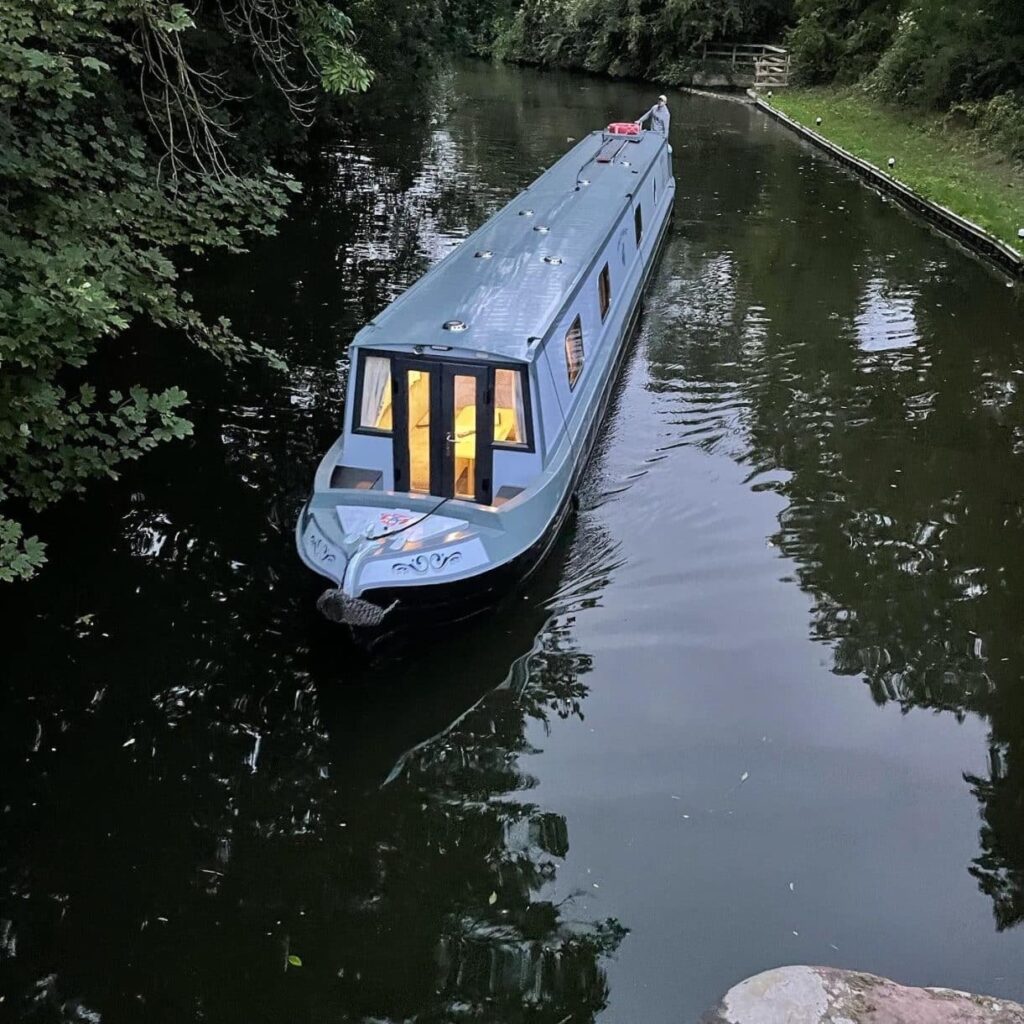
The UK can look very different when viewed from its canals. Instead of travelling between major attractions on busy roads, a narrowboat holiday follows a quieter route through farmland, villages, historic industrial areas and city centres.
There is also growing interest in holidays that allow people to travel at a slower pace, which may explain why more people than ever are choosing canal boat holidays in the UK. For travellers who enjoy exploring gradually and stopping whenever somewhere catches their attention, a canal journey can provide an unusual way to experience the country.
What Parts Of The UK Can You See From A Canal Boat?
Britain’s inland waterways pass through a surprisingly varied mixture of landscapes. Depending on the chosen route, a holiday might include open countryside, wooded cuttings, historic market towns, former industrial districts and busy urban centres.
Central England has a particularly extensive canal network. Routes around Birmingham, Warwickshire, and Worcestershire can provide access to places such as Stratford-upon-Avon, Warwick, Worcester, and even the city centre. The Warwickshire Ring, for example, is a circular journey of approximately 104 miles that passes through both rural and urban surroundings.
Other waterways offer different experiences. Some canals pass through the Welsh countryside, while northern routes cross the Pennines or travel between traditional mill towns. The experience therefore depends heavily on where the journey begins and how far the crew intends to travel.
How Much Can You Realistically See During A Holiday?
Canal boats travel slowly, so daily distances are usually modest. Progress can also be affected by locks, lift bridges, queues, water levels, and the number of other boats using the canal.
This means that route planning should be based on travelling time rather than mileage alone. A stretch containing several locks may take considerably longer than an open section of canal. New boaters may find it helpful to choose a route with fewer locks until they are comfortable steering, mooring, and working through lock gates.
Travelling slowly can be an advantage. Passengers have time to notice small details that might be missed from a car or train, including old canal-side buildings, wildlife, bridges, and changes in the surrounding landscape.
Can You Visit Towns And Attractions Along The Way?
Many canals run close to town centres, visitor attractions, and walking routes. Once the boat has been moored securely, passengers can continue on foot, visit local shops, or stop for a meal.
A route through Worcester, for example, can provide access to the city centre and its cathedral. Other journeys may pass close to castles, museums, historic villages, and country parks.
However, attractions are not always immediately beside the towpath. Checking walking distances, opening times, and suitable mooring locations before setting out can prevent an unnecessary detour. It is also worth leaving some flexibility in the schedule, as reaching a planned stop can take longer than expected.
What Does The Journey Involve In Practice?
A canal boat holiday is usually more hands-on than a hotel break. Someone needs to steer, while other crew members may help with ropes, locks, and mooring. Water tanks may need topping up, rubbish must be disposed of responsibly, and overnight stops need to be chosen.
Locks can add interest to the journey, although a lock-heavy route can become tiring for a small crew. People with limited mobility should also consider how easily they can move between the boat and towpath, as access conditions vary between locations.
Boaters must travel at a considerate speed, especially when passing moored boats, anglers and wildlife. Creating a large wash can damage canal banks and disturb other waterway users.
Is A Canal Holiday Suitable For First-Time Boaters?
Previous boating experience is not usually essential, although new crews should pay close attention during their handover and practical instruction. A shorter break or relatively simple route can provide a manageable introduction.
Weather also makes a difference. Steering for several hours in rain can feel very different from cruising on a warm afternoon, so waterproof clothing and practical footwear are useful even during summer.
Before travelling, boaters should check current navigation notices, closures, and water-level warnings. Canal conditions can change, and a planned route may occasionally need to be adjusted.
Does A Canal Boat Provide A Complete View Of The UK?
A canal holiday will not reach every landscape or famous attraction. It provides a closer look at the places connected by Britain’s historic waterways.
For people who value scenery, local stops, and the experience of travelling itself, it can be a rewarding way to explore. The strongest canal holidays usually come from choosing a realistic route, allowing spare time and accepting that the pace of the journey is part of what makes it memorable.
FAQs
Do you need experience to take a canal boat holiday?
Previous experience is not normally required. Hire companies generally provide instructions and practical guidance before departure.
How far can a canal boat travel in one day?
The distance varies according to locks, bridges, traffic, and cruising time. Routes should be planned using estimated hours rather than mileage alone.
Can you stop anywhere along a canal?
Boats can stop at many towpath locations, but mooring restrictions, private land, and designated zones must be respected.
Are canal boat holidays physically demanding?
They can involve steering, handling ropes, walking beside locks, and opening heavy gates. The amount of activity depends on the route and how duties are shared.
What should you check before starting the journey?
Check the route, lock numbers, expected travelling times, weather forecast, navigation notices, and any temporary closures or water-level restrictions.